The Big Five: A Guide to the World’s Most Famous Dinos

famous dinos

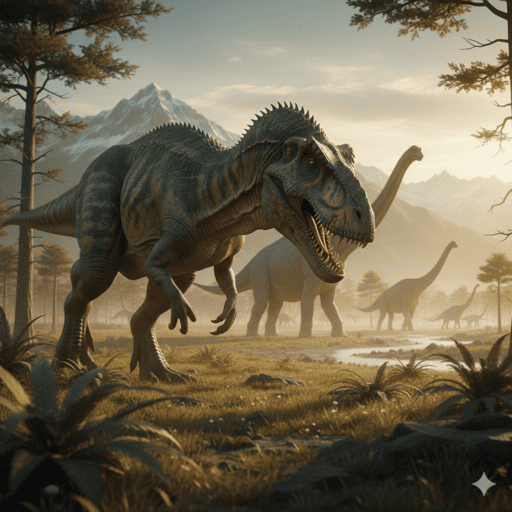
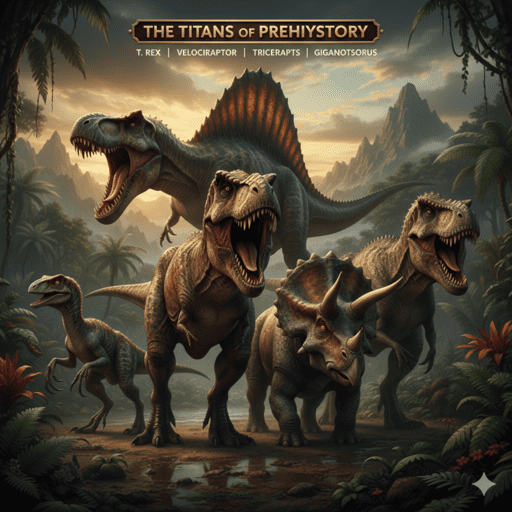
Dinosaurs have fascinated people for generations, but a few legendary species stand above the rest. From towering predators to armored plant-eaters, the most famous dinos have become true icons of prehistoric life. Whether through blockbuster films, museum exhibits, books, or documentaries, names like Tyrannosaurus rex and Velociraptor are instantly recognizable around the world. These dinosaurs don’t just represent ancient history — they represent power, mystery, and the imagination itself.The names alone conjure images of awe and terror: T. rex, Velociraptor, Spinosaurus, Triceratops, and Giganotosaurus. These prehistoric titans aren’t just scientific marvels; they are true pop culture superstars, dominating our imaginations, movie screens, and museum exhibits.

Also interested in some unusual and rarely talked about dinos? Check out our most unusual dino page

Tyrannosaurus Rex: The Complete Guide to the King of the Cretaceous

tyrannosaurus rex

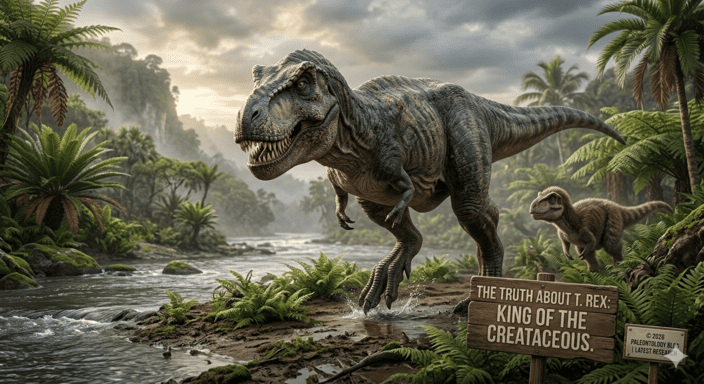
Among the pantheon of prehistoric giants, one name stands above all others: Tyrannosaurus rex. The “Tyrant Lizard King” remains the ultimate symbol of paleontological power and fascination. In the world of 2026 science, our understanding of this apex predator has evolved far beyond the roaring monster of classic cinema, revealing a complex, highly adapted, and surprisingly sophisticated animal that dominated the twilight of the Mesozoic Era.

What Makes T. rex Unique?

The T. rex was a masterpiece of specialized evolution. While other large theropods like Giganotosaurus existed, T. rex optimized one specific strategy: devastating power. Its most defining characteristic was its skull. Unlike the blade-like teeth of its rivals, T. rex possessed thick, conical, banana-sized teeth designed not just to cut meat, but to crush bone.

Engineered for a bite force estimated at 35,000 to 57,000 Newtons—the highest of any known terrestrial animal—it didn’t just bite its prey; it pulverized it, allowing it to access rich marrow that other predators had to ignore.

The Hell Creek Habitat: Rule of Laramidia

T. rex ruled the landmass known as Laramidia, that is now western North America and includes modern-day Montana, South Dakota, and Alberta, Canada. during the Late Cretaceous, roughly 68 to 66 million years ago. Its primary hunting grounds included dense coastal floodplains, open forested regions, and subtropical swamplands, particularly the famous Hell Creek Formation.

It coexisted with, and preyed upon, massive armored herbivore titans like Triceratops and Ankylosaurus, as well as large hadrosaurs like Edmontosaurus. This environment provided the massive amount of biomass required to sustain a multi-ton apex predator.

Behavior and Physical Attributes: A Smart and Social Killer?

Modern paleontology has shattered the image of T. rex as a slow, and as a simple scavenger. New research into endocasts (brain cases) indicates T. rex had a relatively large brain compared to other giant theropods, suggesting complex behaviors.

  • Advanced Senses: Its olfactory bulbs were massive, providing an exceptional sense of smell, while its forward-facing eyes granted excellent binocular vision and depth perception—essential traits for an active hunter.
  • Body: Tyrannosaurus rex was a large carnivorous theropod that walked on powerful hind legs and balanced its body with a long, heavy tail. Adults could reach more than 40 feet in length and weigh up to 15,000 pounds.
  • Teeth: One of its most impressive features was its bite. T. rex possessed about 60 large serrated teeth, some measuring up to eight inches long. These teeth allowed it to crush bone and tear through flesh with incredible force.
  • Social Hunting: Perhaps the most groundbreaking shift in 2026 thinking concerns social behavior. Fossil evidence of multiple T. rex individuals found together in bone beds strongly suggests they may have been social, perhaps even hunting in coordinated packs, particularly when targeting armored prey like Triceratops.

If you want to bring the ‘King of the Tyrants’ into your own home, check out our guide to the most realistic T. rex action figures and collector models of 2026.

Recent Discoveries and Interesting Facts

The last few years have been a golden age for T. rex research:

The Fuzz Fact: While adult T. rex were likely mostly scaly (due to gigantothermy), 2026 paleontology agrees that juveniles were likely covered in a light, downy coat of proto-feathers for insulation and camouflage, which they lost as they grew.

Bite Dynamics: Advanced computer modeling (published in 2025) finally explained how the T. rex skull could withstand its own immense bite force without shattering: its skull possessed key “kinetic” joints that allowed slight flexibility, absorbing the shocking impact of bone-crushing impacts.

The Tail Paradox: T. rex was once depicted with a dragging tail. It is now known that its muscular, heavy tail acted as a necessary counterbalance to its massive skull, held stiffly parallel to the ground for balance and stabilization during rapid turns.

New Beginnings: A 2025 study suggests the species may have evolved in North America after its ancestors migrated from Asia across an ancient land bridge millions of years earlier.

Great Growth: Scientists have also discovered more about how quickly the dinosaur grew. Recent studies of bone growth rings indicate that T. rex may have taken as long as 40 years to reach full size, longer than previously thought.

Tyrannosaurus rex is full of surprising traits that make it unique among dinosaurs:

  • It had one of the strongest bite forces of any land animal in history.
  • Its tiny arms remain a mystery—scientists still debate their purpose.
  • Some of the most famous fossils include Sue and Scotty, two of the largest T. rex skeletons ever discovered.
  • Despite its massive size, it likely relied heavily on smell and vision to locate prey.

Why T. Rex Still Captivates Scientists

Tyrannosaurus rex remains the defining apex predator of Earth’s history because it was a perfect optimization of power, intelligence, and sensory perception. It wasn’t just big; it was exceptionally well-adapted. As we continue to uncover its feathered past and social complexities, the true King of the Dinosaurs only becomes more fascinating.

Horns and Shields: Decoding the Defensive Secrets of the Triceratops

triceratops

​Among the most recognizable dinosaurs ever discovered, Triceratops stands as a symbol of the Late Cretaceous period and a favorite among fossil enthusiasts. Known for its three distinctive facial horns and large bony frill, this herbivorous giant roamed what is now North America roughly 68–66 million years ago. Fossils have been found primarily in the Hell Creek Formation, one of the richest dinosaur fossil sites in the world, helping scientists reconstruct the life and environment of this remarkable creature. Let’s dive into the world of this “three-horned face” giant.

​A Masterpiece of Evolution: Anatomy and Features

​The name Triceratops comes from the Greek words tri (three), keras (horn), and ops (face). Living approximately 68 to 66 million years ago during the Late Cretaceous, this dinosaur was a true powerhouse.It walked on four sturdy legs and belonged to a group of dinosaurs known as ceratopsians, characterized by their elaborate facial horns and bony frills.

  • The Horns: It possessed two long brow horns—which could reach up to 3 feet in length—and a shorter snout horn. While often depicted in cinematic battles against predators, these horns were likely used for both defense and courtship displays.
  • The Frill: The large bony frill protecting its neck wasn’t just armor. More recent thinking leans toward the idea that the frill played a social role — used for species recognition, attracting mates, or communicating dominance within a herd. It may also have been flushed with color in living animals, making it a vivid display structure rather than just a shield.
  • Size and Weight: A full-grown Triceratops could reach lengths of 26 to 30 feet and weigh anywhere from 6 to 12 tons—roughly the weight of two modern African elephants.

​Triceratops Diet: What Did a 12-Ton Herbivore Eat?

​Despite its intimidating appearance, the Triceratops was a dedicated herbivore. Because its head was positioned low to the ground, its diet primarily consisted of low-growing vegetation.

​Using its beak-like mouth and hundreds of “dental battery” teeth, it could easily shear through tough, fibrous plants like ferns, cycads, and palms. Unlike many other dinosaurs that swallowed stones to help grind food, the Triceratops’ teeth were self-sharpening and perfectly evolved for a heavy-duty plant-based diet.

​Triceratops vs. T-Rex: The Ultimate Rivalry

​The “clash of the titans” between the Triceratops and the T. rex isn’t just a Hollywood invention. Fossil evidence, including Triceratops bones with healed T. rex bite marks, suggests these two giants frequently crossed paths in the Hell Creek Formation of North America.

​The Triceratops was uniquely built to stand its ground. Its sturdy, four-legged stance provided a low center of gravity, making it incredibly difficult for a predator to topple.

Defensive Mechanisms: The Living Tank

The defensive arsenal of the Triceratops was a masterpiece of Cretaceous evolution. While its three horns—two brow horns reaching up to 3 feet long and one shorter nasal horn—were once thought to be primarily for show, 2026 biomechanical studies and fossil pathologies (combat scars) confirm they were used in high-intensity physical clashes. Analysis of lesions on the squamosal bone (the lower part of the frill) shows patterns consistent with “horn-locking” during battles with rivals or predators. The iconic bony frill acted as a protective shield for the vulnerable neck muscles, while its massive 10-ton body, supported by a fused “syncervical” neck structure, allowed it to absorb the impact of a charging Tyrannosaurus rex.

Recent Discoveries: “Triceratops Dreams”

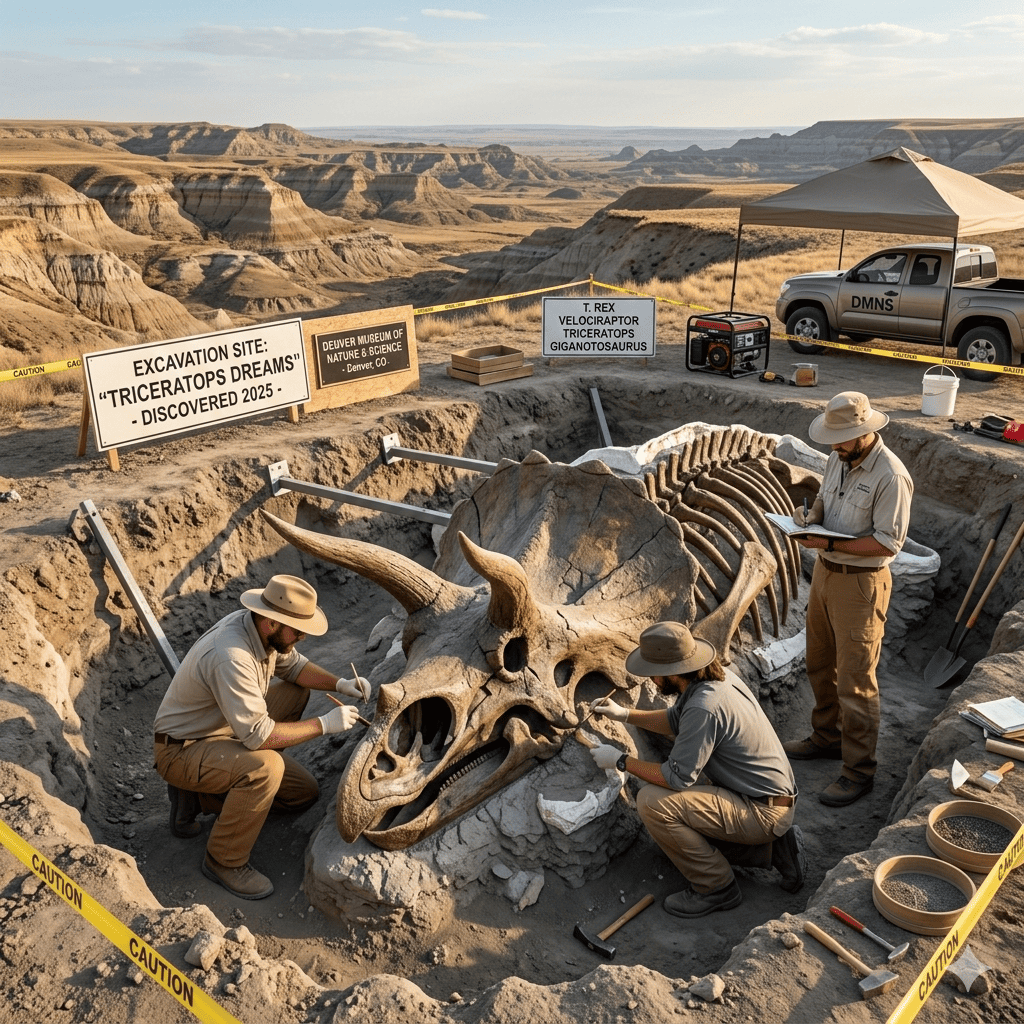
In late 2025 and early 2026, paleontology headlines were dominated by the excavation of a specimen nicknamed “Triceratops Dreams” in the Hell Creek Formation of North Dakota. This find is globally significant because it includes a nearly pristine, 5.4-ton block containing not just the skull, but the articulated neck and ribs. Such completeness is rare and is currently allowing researchers at the Denver Museum of Nature & Science to study growth patterns and horn development in unprecedented detail. Additionally, the specimen “Horridus” has recently provided the first clear look at a complete Triceratops tail, revealing that these animals were even more massive and elongated than previously estimated.

Habitat: The Lush Lowlands of Laramidia

Triceratops thrived on the island continent of Laramidia, specifically in the coastal lowlands and floodplain forests of what is now the American West (Montana, Wyoming, and the Dakotas). During the Late Cretaceous, this region was a warm, humid environment filled with swampy peripheries and lush inland forests. Triceratops acted as a “megagrazing” force, using its powerful, parrot-like beak to snip through tough, fibrous vegetation like cycads, ferns, and palms. Recent environmental reconstructions suggest they preferred these wetter, low-lying areas near the Western Interior Seaway, coexisting in a dense ecosystem with other famous giants like Edmontosaurus and Ankylosaurus.

​Fun Facts for Paleo-Enthusiasts

  1. Massive Skull: The Triceratops had one of the largest skulls of any land animal, sometimes making up nearly one-third of its entire body length.
  1. Solo or Social? While often thought of as solitary, recent fossil discoveries of “bone beds” suggest that younger Triceratops might have traveled in small groups.
  1. The “Torosaurus” Debate: For years, paleontologists debated whether Torosaurus was a separate species or simply an elderly Triceratops with an expanded frill. Current consensus generally leans toward them being distinct species.

​The Triceratops remains a symbol of the prehistoric world’s diversity and resilience. Whether it was defending its territory or grazing through ancient marshes, this horned giant continues to capture our imagination millions of years after it vanished.
Fascinating Velociraptor Facts You Need to Know

velociraptor

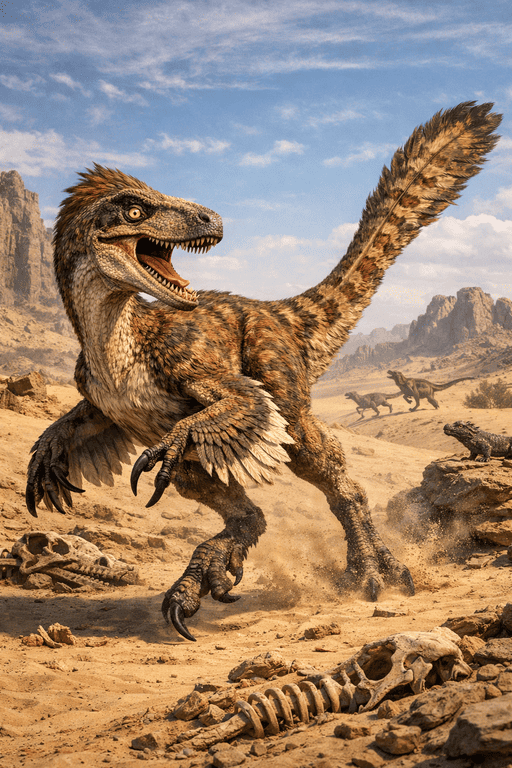
When you hear the word “Velociraptor,” your mind probably jumps to the towering, scaly predators of Hollywood fame. However, the real Velociraptor mongoliensis was a very different—and in many ways, more fascinating—creature. In the world of 2026 paleontology, we now recognize the Velociraptor not as a monster from a movie, but as a highly specialized, feathered, and intelligent hunter that prowled the deserts of prehistoric Asia. These small but formidable predators lived around 75 million years ago during the Late Cretaceous period. Fossils show they roamed ancient desert regions of what is now the Gobi Desert in modern-day Mongolia, where shifting sands helped preserve their remains for millions of years.

If seeing these feathered predators in person is on your bucket list, you can track down the most life-like skeletons and interactive displays in our guide to the best dino destinations, including museums, exhibits, and attractions.

The Size Myth: Real-Life Raptors vs. Cinema

One of the most common misconceptions is the size of the Velociraptor. While movies often depict them as being as tall as a human, the actual dinosaur was roughly the size of a large turkey. It stood about 0.5 meters (1.6 feet) tall at the hip and reached lengths of 2 meters (6.6 feet) from snout to tail-tip.

Despite its smaller stature, it was an apex predator for its size. Weighing in at approximately 15 to 20 kilograms (33-44 pounds), it was built for speed, agility, and precision strikes rather than brute force.

Feathers and Flightless Wings

The most striking visual difference between the real Velociraptor and its pop-culture counterpart is the presence of feathers. Fossil evidence, including “quill knobs” found on the ulna (forearm bone), confirms that Velociraptors were covered in bird-like plumage.

While they couldn’t fly, these feathers likely served several purposes:

  • Thermoregulation: Keeping the dinosaur warm in the fluctuating temperatures of the Gobi Desert.
  • Display: Using vibrant plumage to attract mates or intimidate rivals.
  • Stability: Helping the predator maintain balance while pinning down struggling prey.

The Deadly “Sickle Claw”

The Velociraptor’s most iconic feature is the oversized, retractable sickle-shaped claw on the second toe of each foot. For a long time, it was believed these claws were used to disembowel prey. However, modern biomechanical studies suggest they were used more like “crampons”—to pierce the neck or vital organs and to grip the prey firmly while the dinosaur used its sharp teeth to finish the job. This sickle-shaped talon could grow up to 3 inches long.

Intelligence and Hunting Tactics

Were they pack hunters? Scientists are still in debate over this. While evidence of social behavior in related dromaeosaurs exists, the Velociraptor is often found as a solitary hunter. The famous “Fighting Dinosaurs” fossil—which captures a Velociraptor and a Protoceratops locked in a death struggle—shows a one-on-one battle. This suggests they were brave and capable of taking down prey much bulkier than themselves. Velociraptors were carnivores that hunted small animals, reptiles, and possibly other dinosaurs. Fossil discoveries suggest they were active hunters rather than scavengers. Regardless, their sharp teeth, grasping hands, and strong legs made them highly effective predators for their size.

Why the Velociraptor Still Captivates Us

The Velociraptor represents the perfect bridge between dinosaurs and modern birds. It was a fast, smart, and lethal predator that proved you didn’t need to be the size of a T. rex to be a legend. As we continue to uncover more about their feathered lives, the Velociraptor remains a testament to the incredible diversity and “cool factor” of the Cretaceous period.

Discovery and Scientific Significance

The first velociraptor fossil was discovered in 1923 during an expedition led by the American Museum of Natural History. Since then, additional finds have helped scientists better understand their anatomy, growth, and evolutionary relationship to modern birds.

Recent Discoveries

Recent years have brought a wave of “raptor” excitement, most notably with the 2025 and early 2026 analysis of Shri rapax, a close cousin of Velociraptor mongoliensis from the same Gobi Desert formations. While the original Velociraptor was built for speed and likely used its feet to pin down prey, discoveries of this new relative reveal a much more “rapacious” hunter with exceptionally robust hands and arm bones nearly 150% thicker than its cousins. This suggests a fascinating era of “niche partitioning,” where Velociraptor may have focused on smaller, swifter lizards while its more muscular relatives like Shri used pure grip strength to grapple with larger, tougher herbivores like Protoceratops. Furthermore, the 2026 identification of dromaeosaurid teeth in Serbia has confirmed that these agile predators were much more geographically widespread than previously thought, inhabiting vibrant island ecosystems across prehistoric Europe.

Dying to rock some velociraptor merch? Here’s our guide to dino clothing, merch, and accessories.

Velociraptor: Myth vs. Fact

FeatureThe Hollywood MythThe Paleontology Fact
SizeHuman-sized or larger (approx. 6ft tall).Size of a turkey (approx. 1.6ft tall at the hip).
SkinScaly, reptilian skin like a lizard.Covered in bird-like feathers with quill knobs.
IntelligenceCapable of opening doors and complex puzzles.High for a dinosaur, likely on par with modern smart birds or crows.
HuntingAlways hunted in large, coordinated packs.Primarily a solitary hunter or small family groups.
The ClawUsed for disemboweling and “slashing” prey.Used for pinning and piercing vital areas (neck/windpipe).
SpeedCould outrun a car or a cheetah.Fast, but clocked at roughly 25 mph (40 kph).

Reasons Why Spinosaurus Was the Most Unique Predator in History

spinosaurus

For decades, Spinosaurus was a mystery, known primarily from fragmentary fossils destroyed in World War II. But thanks to incredible new discoveries and re-evaluations over the last decade (especially prominent in 2026 paleontology), this North African behemoth has not only claimed the title of the largest known carnivorous dinosaur, but also completely rewritten the rules of how we thought giant predators lived.

More Than Just a Giant: The True Face of Spinosaurus

While Tyrannosaurus rex and Giganotosaurus ruled terrestrial landscapes, Spinosaurus aegyptiacus dominated the ancient river systems of what is now North Africa. Reaching lengths of 14 to 15 meters (45-50 feet) and weighing between 7 to 12 tons, it was longer than any other known predatory dinosaur. But it wasn’t just its size that set it apart; its entire anatomy screams “river monster.”

A Hunter Unlike Any Other: Semi-Aquatic Adaptations

Forget the upright, land-dwelling monster from the movies. Modern research, fueled by the discovery of a near-complete skeleton, reveals a creature uniquely adapted to an aquatic lifestyle:

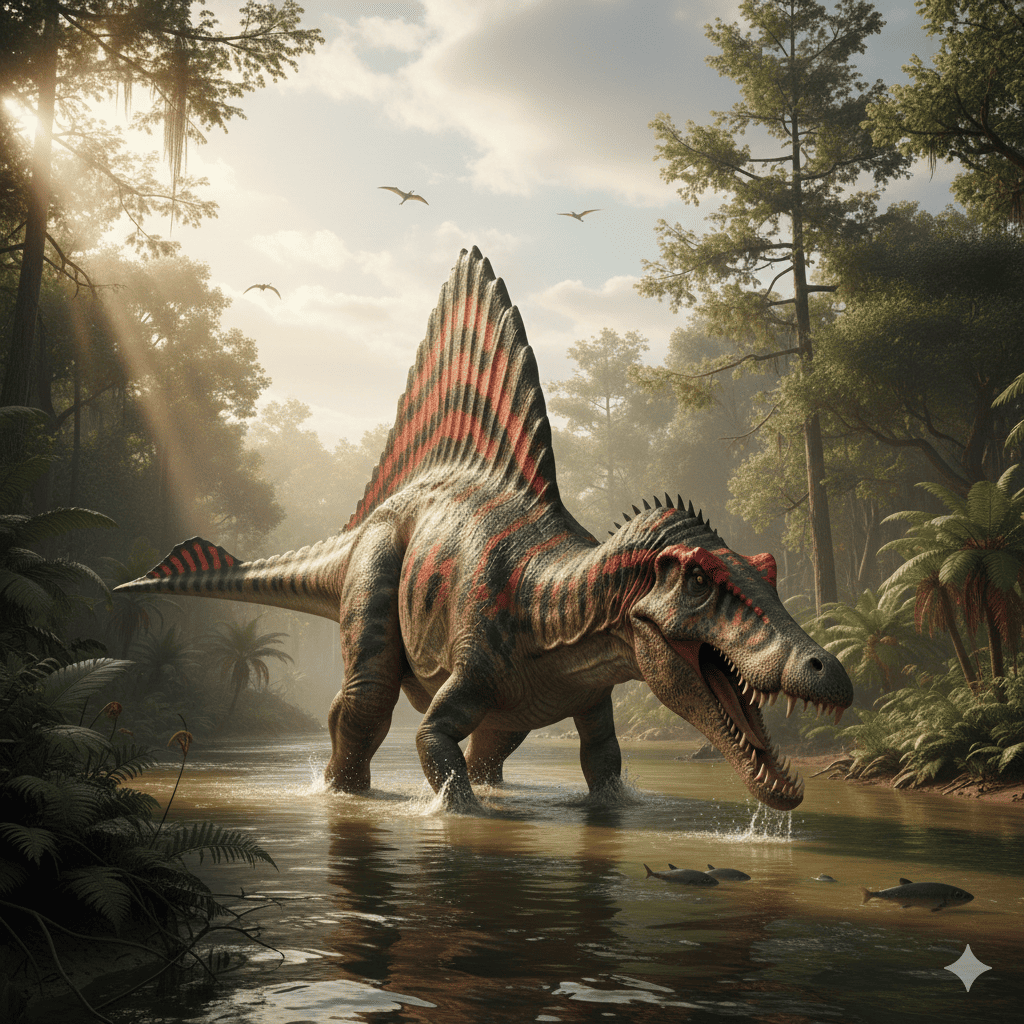
  • Crocodile-Like Snout: Its long, narrow jaws were packed with conical, non-serrated teeth—perfect for spearing slippery fish, its primary diet.It’s nostrils were set farther back on its snout, an adaptation that suggests a semi-aquatic lifestyle.
  • Massive Dorsal Sail: The iconic sail, supported by neural spines over 1.6 meters (5 feet) tall, was likely used for display, but its function is still debated. It certainly didn’t hinder its movement in water. Scientists believe this sail may have been used for display, temperature regulation, or species recognition.
  • Dense Bones & Short Hind Limbs: Unlike land-based predators with hollow bones, Spinosaurus had dense bones, acting as ballast to help it submerge and maneuver underwater. Its relatively short, powerful hind limbs were better suited for paddling than for sustained running on land.
  • Paddle-Like Tail: The most game-changing discovery came with the reconstruction of its tail in the late 2010s and early 2020s. It was broad, flexible, and paddle-shaped, confirming its ability to propel itself powerfully through water, much like a crocodile or newt.

The Apex Predator of the Rivers

Spinosaurus wasn’t just splashing around in the shallows; it was the undisputed apex predator of its unique ecosystem. It coexisted with other large predators like Carcharodontosaurus and Deltadromeus, but its specialization allowed it to thrive in a niche untouched by purely terrestrial hunters. Its jaws and teeth closely resemble those of modern crocodiles, supporting the idea that it hunted in rivers and coastal lagoons. Its diet likely consisted of massive fish, smaller aquatic reptiles, and perhaps even some unlucky terrestrial animals that ventured too close to the water’s edge. This makes Spinosaurus unique among giant predatory dinosaurs, as most were land-based hunters.

Recent Discoveries

The landscape of Spinosaurus research was fundamentally transformed in February 2026 with the announcement of a second species: Spinosaurus mirabilis. Discovered in the remote Jenguebi region of Niger by a team led by Paul Sereno, this “astonishing” new predator lived nearly 600 miles inland, far from the coastal habitats of its famous cousin, S. aegyptiacus. The most striking feature of S. mirabilis is a massive, scimitar-shaped head crest reaching 20 inches in height—the tallest ever found on a theropod—which was likely covered in vibrant keratin for social display. This discovery has reignited the “swimmer vs. wader” debate; because these fossils were found in inland river deposits alongside land-dwelling sauropods, researchers now describe Spinosaurus as a “hell heron.” This model suggests that while it was capable of wading into deep water on its sturdy hind limbs to trap massive fish like coelacanths, it was likely a shoreline specialist rather than a fully aquatic, crocodile-style pursuit predator.

While the ‘river king’ continues to surprise us, the Spinosaurus is just one of many prehistoric giants currently being redefined by a wave of groundbreaking 2026 dinosaur discoveries across the globe.

Why Spinosaurus Still Fascinates Scientists

Spinosaurus continues to intrigue paleontologists because it challenges traditional ideas about how large predatory dinosaurs lived. Evidence suggests it spent significant time in water, making it the first known truly semi-aquatic dinosaur. Each new fossil find adds to our understanding of this unusual predator and its prehistoric ecosystem.

In short: Spinosaurus stands out not just for its size, but for its unique adaptations, mysterious history, and ongoing scientific discoveries—ensuring it remains one of the most talked-about dinosaurs in paleontology.

Mind-Blowing Facts About Giganotosaurus You Didn’t Know

giganotosaurus

​For decades, the Tyrannosaurus rex held the undisputed title of the “King of Dinosaurs.” However, in the mid-1990s, amateur fossil hunter Rubén Carolini’s discovery in the Patagonian region of Argentina shook the foundations of paleontology. Enter Giganotosaurus carolinii, a predator so massive it made the world rethink everything they knew about the Late Cretaceous period. The discovery expanded our understanding of theropod diversity and demonstrated that different continents supported their own giant predators during the Cretaceous period.

​A Predator of Mammoth Proportions

​The name Giganotosaurus (pronounced JIG-ah-NOT-oh-SOR-us) literally translates to “giant southern lizard.” Living approximately 97 to 99 million years ago, this carcharodontosaurid was a titan of its era.

​While measurements vary based on skeletal completeness, estimates suggest:

  • Speed: Estimated at up to 31 mph (50 km/h)
  • Length: 12 to 13 meters (39–43 feet)
  • Weight: Between 6 and 8 tons

​Though it was longer than the average T. rex, the Giganotosaurus was built differently. It was leaner and more agile, designed for a different style of combat and hunting.

​Anatomy of a Killer

​Unlike the T. rex, which used massive, bone-crushing force to kill its prey, Giganotosaurus was a “slasher.”

  • The Skull: It possessed one of the longest skulls of any theropod, reaching up to 1.8 meters (6 feet).
  • The Brain: Interestingly, despite its massive size, its brain was roughly the size and shape of a banana—about half the size of a T. rex brain. This suggests that while it was a highly efficient hunter, it lacked the complex sensory processing of its northern cousin.
  • The Build:The dinosaur possessed powerful hind legs, relatively small arms with three-fingered claws, and a long, muscular tail that provided balance while running. Scientists estimate it could reach speeds of up to 31 mph in short bursts—remarkable for an animal of its size.
  • The Teeth: Its teeth were serrated and blade-like, perfect for slicing through flesh and causing massive blood loss in its prey.

​What Did Giganotosaurus Eat?

​Giganotosaurus lived in a world of giants. It shared its environment with some of the largest herbivores to ever walk the Earth, such as the long-necked Argentinosaurus.

​Evidence suggests that Giganotosaurus may have hunted in family groups or small packs. This social behavior would have been necessary to take down a multi-ton sauropod. By using their “bite and retreat” tactic, a pack could wear down a massive herbivore until it succumbed to its injuries.

​Giganotosaurus in Pop Culture

​The Giganotosaurus has recently enjoyed a surge in fame, most notably as the “villain” dinosaur in Jurassic World: Dominion. While the film took some creative liberties with its appearance (adding dorsal spikes that aren’t supported by fossil evidence), it correctly portrayed the animal as a formidable apex predator capable of challenging any other carnivore.

Recent Discoveries

The recent discoveries surrounding Giganotosaurus—the “Giant Southern Lizard”—have shifted our understanding of how the largest predators to ever walk the Earth actually lived. While Tyrannosaurus rex often steals the spotlight, 2025 and early 2026 research from the Patagonian badlands of Argentina suggests that Giganotosaurus was a very different kind of king.

The “Alna” Connection

In February 2026, a groundbreaking report from the Rio Negro Province of Argentina revealed a nearly complete skeleton of one of the world’s smallest dinosaurs, Alnashetri. While Alnashetri was only the size of a crow, it was found in the same 95-million-year-old rock layers as Giganotosaurus. This discovery is vital because it proves that Giganotosaurus didn’t just live in a “land of giants”—it ruled a complex, multi-tiered ecosystem. By studying these smaller neighbors, paleontologists are finally piecing together the full food web of the Candeleros Formation, showing that Giganotosaurus likely ignored small snacks like Alnashetri to focus its massive energy on the 70-ton Argentinosaurus.

The “Shark-Toothed” Specialist

Unlike the bone-crushing T. rex, recent dental analysis confirms that Giganotosaurus was a slicing specialist. Belonging to the Carcharodontosauridae (shark-toothed lizards) family, its 8-inch teeth were thin, serrated, and blade-like. New 2025 biomechanical models suggest that Giganotosaurus used a “slash-and-bleed” hunting style. Rather than grappling with its prey, it likely delivered deep, hemorrhaging wounds to the soft underbellies or legs of massive sauropods, waiting for blood loss to do the heavy lifting.

New Growth and Social Theories

2026 histological studies (looking at the microscopic structure of the bones) have provided a new timeline for how these giants grew. Much like the recent 2026 T. rex studies, evidence suggests Giganotosaurus had a protracted growth period, taking nearly 35 to 40 years to reach its full 8-ton weight. Furthermore, the discovery of related “bone beds” containing multiple individuals of its cousin, Mapusaurus, has led many experts to believe that Giganotosaurus was semi-social. This theory suggests they may have formed “loose gangs” to harass and take down the largest animals that ever lived, making them the most formidable collective force of the Cretaceous.

​Summary: The Ultimate Apex Predator

​The Giganotosaurus remains a symbol of the incredible biodiversity of ancient South America. It wasn’t just a “bigger T. rex”—it was a specialized, lightning-fast predator that ruled the southern hemisphere with razor-sharp efficiency.