The world of paleontology is constantly evolving, with new discoveries regularly shaking up our understanding of prehistoric life. Far from being ancient history, dinosaurs continue to capture our imaginations as scientists unearth incredible new species and redefine what we thought we knew. Here are some of the most exciting recent dino discoveries that are causing a stir in the scientific community and beyond.
One of the most buzz-worthy finds is the “Dragon of Death”, scientifically named Thanatotheristes degrootorum. Discovered in Alberta, Canada, this terrifying new species of tyrannosaur existed roughly 79.5 million years ago, predating its more famous cousin, T-Rex, by about 12 million years. Measuring an estimated 26 feet long, this apex predator was the first new tyrannosaur species found in Canada in 50 years. Its distinct ridges along the upper jaw give it a unique, fearsome appearance, providing invaluable insights into the diversity of tyrannosaurs in North America during the Late Cretaceous period. The “Dragon of Death” reminds us that the T-Rex lineage was far more expansive and varied than previously understood.
North America has also contributed to recent breakthroughs. Paleontologists at the North Carolina Museum of Natural Sciences have named a new species called Nanotyrannus lancensis, a dinosaur closely related to the mighty T. rex. While debates continue over its exact relationship to T. rex, the discovery highlights how even iconic dinosaur families still hold surprises.
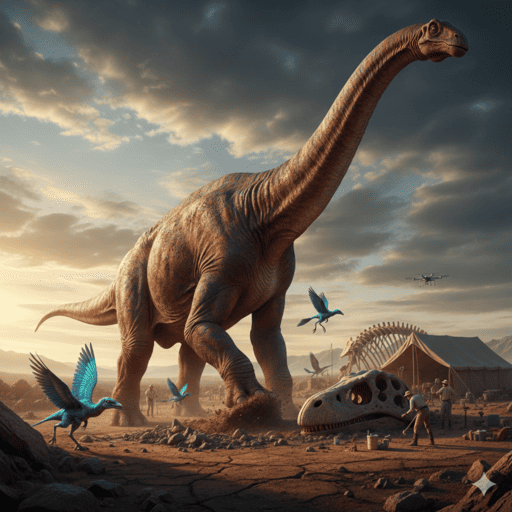
Further south, in the arid landscapes of Patagonia, Argentina, paleontologists have unearthed the fossilized remains of a colossal new sauropod. While not yet formally named, this enormous herbivore is believed to be one of the largest animals to ever walk the Earth. Its partial skeleton suggests an animal that could have rivaled or even surpassed Patagotitan mayorum in size, pushing the boundaries of what we thought was possible for land animals. The sheer scale of this discovery offers tantalizing clues about the environmental conditions and food resources available during the Cretaceous period that could sustain such immense creatures.
One of the most intriguing discoveries of the past year is Zavacephale rinpoche, a newly identified pachycephalosaur from Mongolia. This small, dome-headed dinosaur represents the oldest known member of its group, helping scientists understand how dome-skull structure evolved in this mysterious family of head-butting dinos. Its well-preserved fossils were unearthed in the Gobi Desert, offering fresh insight into early dinosaur evolution.
Finally, a truly unique find in China has unveiled a remarkably well-preserved fossil of a small, bird-like dinosaur with iridescent feathers. While the exact species is still under detailed study, the preservation of its plumage, including microscopic structures that reveal its shimmering colors, is astounding. This discovery offers direct evidence of vibrant coloration in certain dinosaurs, challenging the long-held notion of drab, scaly reptiles. It paints a more colorful and dynamic picture of prehistoric ecosystems and highlights the close evolutionary relationship between dinosaurs and modern birds.
Beyond new species, researchers are using cutting-edge technology to reinterpret old evidence. A new AI-based method helps scientists more accurately identify which species made specific dinosaur footprints, reducing the guesswork that has long challenged paleontologists. This technique enhances our ability to link tracks with species — even suggesting that some very ancient tracks might belong to bird-like ancestors of dinosaurs.
Other noteworthy research has revealed new evidence of multispecies dinosaur herding behavior, uncovering trackways dominated by ceratopsians that suggest complex social dynamics among herds.
These recent discoveries underscore the dynamic nature of paleontology. Each fossil unearthed is a window into a lost world, continuously refining our understanding of these magnificent creatures that once ruled the Earth. From fearsome predators to colossal herbivores and surprisingly colorful ancestors of birds, the age of dinosaurs is still revealing its most exciting secrets.