Dinosaurs, those magnificent creatures of the past, have captivated our imaginations for centuries. While we often think of them as enormous, fearsome beasts, the world of dinosaurs is also filled with surprising, quirky, and downright fun facts that will make you look at them in a whole new light. Get ready to stomp through some of the most enjoyable tidbits about these prehistoric giants!
The very atmosphere of the Earth was different during the Mesozoic Era. Because the planet was much warmer and had higher levels of carbon dioxide, plants grew at an explosive rate, providing a nearly endless buffet for herbivores. This “supercharged” vegetation is part of what allowed dinosaurs to reach such gargantuan sizes. Furthermore, the days were actually shorter! Because the Earth’s rotation has been gradually slowing down due to the moon’s tidal pull, a day in the late Cretaceous period lasted only about 23.5 hours. If you were a dinosaur, you’d have had 30 minutes less in your day to hunt or forage than we do now.
Here’s a mind-boggler: the word “dinosaur” itself means “terrible lizard,” coined by Sir Richard Owen in 1841. However, many dinosaurs weren’t actually lizards! They belonged to a separate group of reptiles with unique hip structures. And while some had scales like modern lizards, the many feathered dinosaurs mean they were far from just scaly beasts. Fossil discoveries, especially in China, show that many dinosaurs, in fact, are closely related to birds. These feathers were not just for flying as they may have helped with temperature control, display, or camouflage. This discovery has completely changed how scientists and artists imagine dinosaurs, moving away from scaly reptiles to more bird-like creatures.
Did you know that not all dinosaurs were massive? While giants like Brachiosaurus and T-Rex often steal the spotlight, many dinosaurs were actually quite small. One of the smallest known dinosaurs, Compsognathus, was only about the size of a chicken! Imagine a tiny dinosaur scurrying around, perhaps even making a cute little chirping sound. These miniature marvels remind us that diversity in size was just as prevalent in the Mesozoic Era as it is today.
Let’s talk about speed. While some dinosaurs were undoubtedly fast, like the agile Velociraptor, the slowest dinosaur might surprise you. Some of the colossal long-necked sauropods, due to their immense weight and limb structure, would have moved at a ponderous pace, maybe only 2-3 miles per hour. Imagine a giant, slow-motion parade of these gentle giants munching on leaves!
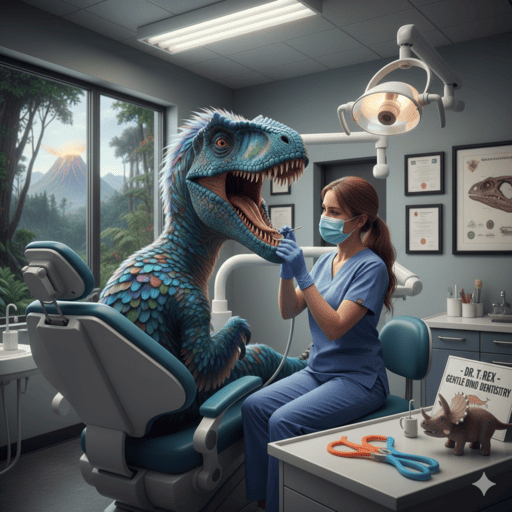
Science is constantly discovering more about the dinosaurs day to day life. For instance, we often find “gastroliths” inside dinosaur fossils—smooth, polished stones that the animals swallowed on purpose. Since many dinosaurs didn’t have the right kind of teeth to chew tough plant matter, they used these stones in a “gizzard” to grind up food in their stomachs, much like modern crocodiles and chickens do today. This internal rock-crusher allowed them to process massive amounts of ffood. Also, fossilized teeth show signs of decay and infection, meaning some dinosaurs suffered from toothaches just like humans do. Who knew that even dinosaurs could get cavities?
Dinosaurs also lived on every continent, including Antarctica. Fossils found in polar regions show that some dinosaurs adapted to extreme environments, dealing with long periods of darkness and cooler temperatures. This proves dinosaurs were far more adaptable than once believed, thriving in deserts, forests, coastal regions, and icy landscapes.
Another fun fact is that dinosaurs laid eggs, and some species cared for their young. Fossilized nests and eggs suggest certain dinosaurs protected their offspring and may have lived in family groups. This behavior brings dinosaurs closer to modern birds and challenges the idea that they were cold, mindless reptiles.
Dino fun facts also extend to how dinosaurs communicated. While we can’t know exactly what sounds they made, scientists think some dinosaurs used deep calls, body movements, or even bright colors to communicate. Crests, horns, and frills may have played a key role in display and social interaction. New research suggests that they might have even done mating dances similar to many species today.
These dino fun facts show that dinosaurs were complex, intelligent, and incredibly diverse. With new discoveries happening all the time, the prehistoric world continues to surprise us, proving there’s always something new to learn about the giants that once ruled the planet.
While these prehistoric giants were certainly impressive, some of them were stuck with titles that are more hilarious than heroic—check out our list of the most ridiculous and funny dinosaur names ever discovered to see which ones really got the short end of the stick.”